
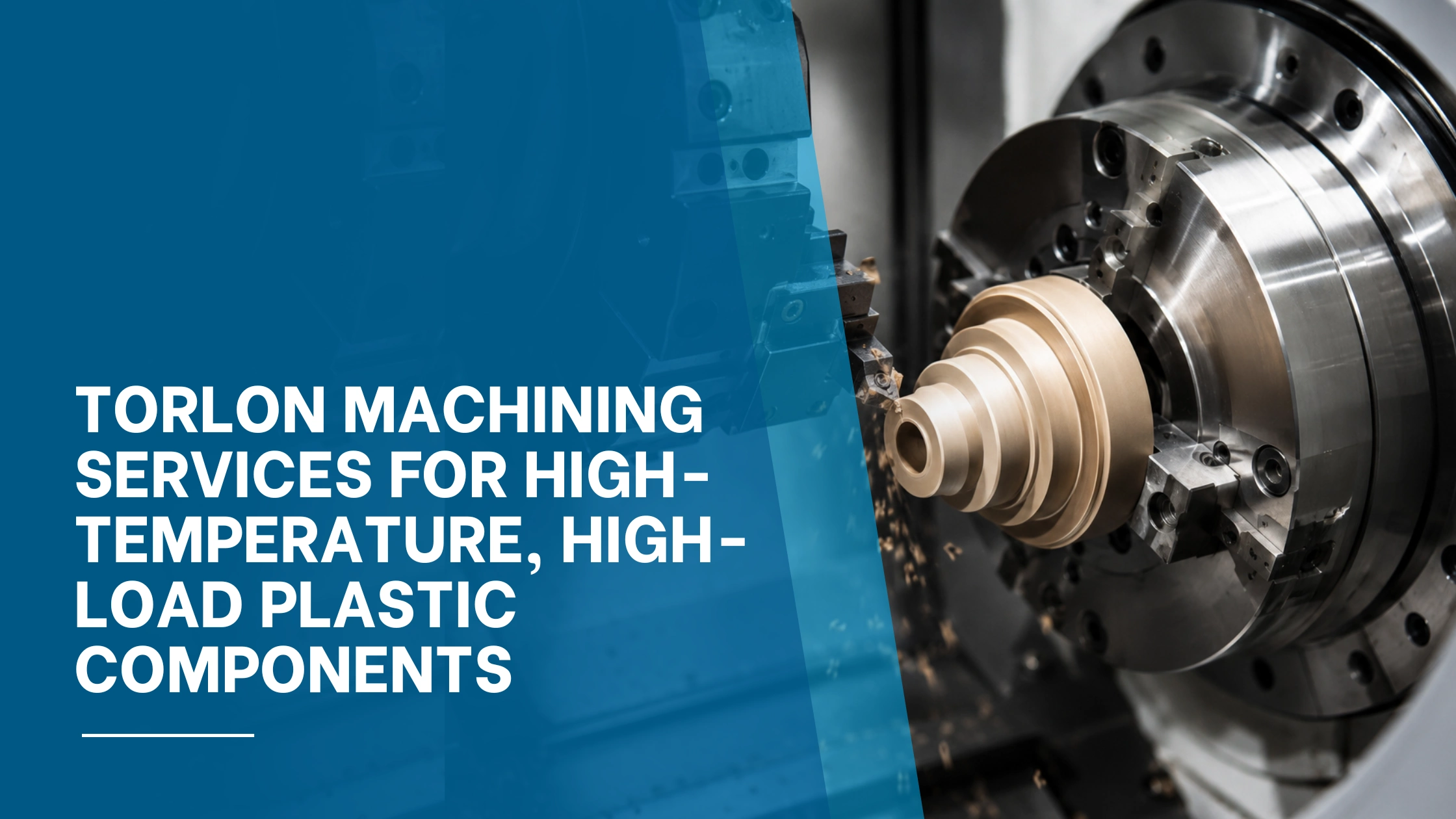
Topic: Torlon® Machining Services
Material: Torlon® PAI (Polyamide-Imide)
Industries Covered: Aerospace & Defense, Oil & Gas, Energy, Semiconductor, Heavy Equipment, Industrial
Common Applications: Bearings, Bushings, Wear Rings, Valve Seats, Seal Components, Insulators
When standard engineering plastics cannot handle the combination of heat, load, wear, and dimensional demands, Torlon® PAI is often one of the materials engineers evaluate. Torlon, also known as polyamide-imide or PAI, is a high-performance thermoplastic known for strength, stiffness, wear resistance, creep resistance, and stability in demanding service environments.
At Lehigh Valley Plastics, we machine custom Torlon components to customer prints for applications where material performance, tolerances, and long-term reliability matter. Our team works with OEMs, engineers, maintenance teams, and sourcing professionals who need plastic parts that can hold up in severe operating conditions.
Why Use Torlon for Machined Plastic Parts?
Torlon is typically selected when the application requires more performance than nylon, acetal, UHMW, or other standard engineering plastics can provide. It performs well in demanding environments involving elevated temperatures, high mechanical loads, friction, and tight dimensional requirements.
According to Syensqo, Torlon PAI performs under severe service conditions up to 260°C / 500°F and offers strong wear, creep, chemical, electrical, and dimensional performance.
Common reasons engineers consider Torlon include:
- High strength and stiffness at elevated temperatures
- Excellent dimensional stability
- Strong wear and creep resistance
- Good performance in bearing and wear applications
- Electrical insulating properties in certain grades
- Ability to replace metal in select high-performance applications
- Better performance than many standard plastics under heat and load
Torlon is not always the lowest-cost material option, but it can be the right choice when part failure, downtime, heat exposure, or wear creates a larger cost than the material itself.
Common Torlon Machined Parts
LVP can support Torlon components for a wide range of industrial and OEM applications, including:
- Bearings
- Bushings
- Wear rings
- Valve seats
- Seal components
- Rollers
- Insulators
- Structural plastic components
- High-temperature wear parts
- Aerospace and defense components
- Heavy equipment components
- Oil and gas components
- Semiconductor equipment parts
Torlon is commonly reviewed for applications where the part needs to maintain strength and stability under stress, heat, or repeated movement.
Torlon vs. PEEK: Which Material Is Better?
A common question is whether an application should use Torlon or PEEK. Both are premium high-performance plastics, but they are not interchangeable in every application.
| Material | When It Is Often Considered |
|---|---|
| Torlon / PAI | Very high strength, stiffness, wear resistance, and creep resistance under load — especially in severe service conditions where standard thermoplastics may deform, wear too quickly, or lose mechanical performance |
| PEEK | Chemical resistance, temperature resistance, toughness, and broader availability — a strong choice for semiconductor, oil and gas, aerospace, medical, and industrial applications |
Torlon is often considered when the application requires very high strength, stiffness, wear resistance, and creep resistance under load. It is especially valuable in severe service conditions where standard thermoplastics may deform, wear too quickly, or lose mechanical performance.
PEEK is often used when chemical resistance, temperature resistance, toughness, and broader availability are important.
The right answer depends on the operating conditions. Temperature, load, speed, friction, chemical exposure, tolerance requirements, moisture exposure, and budget all need to be reviewed before selecting the material.
At LVP, we can help review your application and determine whether Torlon is the best fit or whether another engineered plastic such as PEEK, Ultem, nylon, acetal, or PTFE may be more cost-effective.
Industries That Use Torlon Components
Aerospace & Defense
Torlon is a strong fit for aerospace and defense applications where lightweight components need to perform under heat, load, and tight dimensional requirements.
Oil & Gas and Energy
In energy applications, Torlon can be evaluated for seals, wear rings, valve components, and other machined parts exposed to load, temperature, and mechanical stress.
Semiconductor and Industrial Equipment
For equipment builders, Torlon may be considered for precision plastic components, insulators, fixtures, or parts that require dimensional stability and performance under demanding operating conditions.
Machining Considerations for Torlon
Torlon is a premium material, and machining it correctly matters. Material cost, stress control, workholding, tooling, tolerances, part geometry, and inspection all play an important role in the final part.
Torlon can be more demanding to machine than standard plastics, especially reinforced grades.
That is why working with a plastics-focused machine shop is important. LVP machines engineered plastics every day and understands that plastic machining is different from metal machining. Material movement, heat buildup, moisture, stress, and tolerance planning all need to be considered before production.
Work With LVP on Custom Torlon Machined Parts
Lehigh Valley Plastics supports customers that need custom machined engineered plastic components built around the application. Whether you already have a Torlon material callout or need help comparing Torlon against PEEK or another high-performance plastic, our team can help review your project.
Send us your print, quantity, material requirement, and application details, and we can help determine the right machining approach for your part.
Need a Torlon component machined to print? Send us your Torlon print for review.
Frequently Asked Questions
When should I use Torlon instead of PEEK?
Torlon may be preferred when the application requires very high strength, stiffness, wear resistance, and creep resistance under load. PEEK may be better when chemical resistance, toughness, availability, or cost are bigger drivers.
Can Torlon be CNC machined?
Yes. Torlon can be CNC machined into custom components, but it requires proper tooling, fixturing, and tolerance planning because it behaves differently than metal and many standard plastics.
What industries use Torlon machined parts?
Torlon is commonly considered for aerospace, defense, heavy equipment, oil and gas, energy, semiconductor, and industrial equipment applications.
Is Torlon good for bearings and bushings?
Yes, certain Torlon grades are commonly used in bearing and wear applications where load, heat, and dimensional stability are important.
Is Torlon more expensive than PEEK?
Torlon is typically a premium material and can be more expensive than many engineered plastics. The best choice depends on whether the application truly requires Torlon’s performance benefits.