
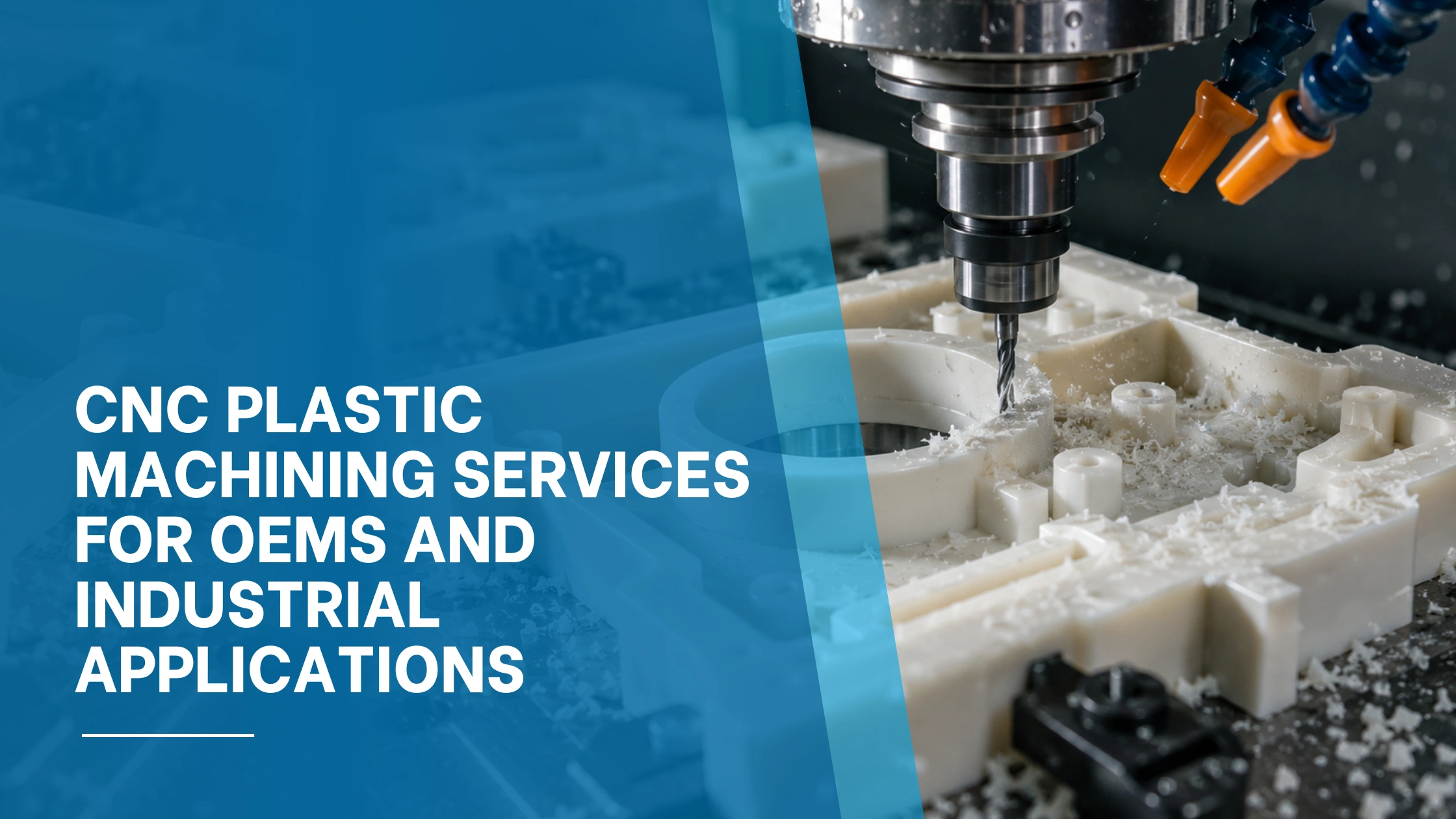
Topic: CNC Plastic Machining Services
Service Family: Custom Parts-to-Print Manufacturing
Materials Covered: Nylon, Nylatron, UHMW, Acetal, PEEK, Ultem, PTFE, and Advanced Engineering Polymers
Common Applications: Wear Parts, Bushings, Sheaves, Rollers, Guides, OEM Production Components
When OEMs, machine builders, and industrial buyers need durable plastic components made to print, material selection and machining experience matter. Engineered plastics behave differently than metal, and the right machining partner needs to understand how material movement, tolerances, wear, friction, chemical exposure, and production repeatability impact the final part.
Lehigh Valley Plastics provides CNC plastic machining services for custom parts built around the application. From replacement wear parts and OEM production components to complex machined plastic parts for industrial equipment, LVP supports customers that need accurate, reliable, and repeatable parts-to-print manufacturing.
Operating from an ISO 9001:2015 certified facility in Bethlehem, Pennsylvania, LVP machines and fabricates advanced engineering polymers for customers that require dimensional accuracy, material traceability, and consistent quality from prototype through production.
Parts-to-Print CNC Plastic Machining
LVP supports customers that already have a print, drawing, model, or existing component that needs to be manufactured from engineered plastic. Whether the part is a new OEM design, a replacement wear part, or an existing component being converted from metal to plastic, our team can review the print, material requirement, quantity, tolerances, and application details.
Our CNC plastic machining services support:
- OEM production parts
- Replacement wear parts
- Machine builder components
- Industrial equipment parts
- Conveyor and material handling components
- Bearings, bushings, rollers, guides, and wear pads
- Sheaves and pulley components
- Spacers, insulators, blocks, and plates
- Low-volume, repeat, and production runs
- Custom plastic parts made to customer prints
CNC Machining for OEM Sourcing Teams
OEM sourcing teams need more than a machine shop. They need a supplier that can support quality, consistency, communication, material knowledge, and repeat production. LVP works with OEMs that need custom machined plastic components for new equipment builds, replacement parts, aftermarket programs, and ongoing production needs.
For OEM buyers, LVP can help support:
- Parts made directly to print
- Repeatable production runs
- Material selection and substitution review
- Quote support for new and existing parts
- Machining of engineered plastics and high-performance polymers
- Inspection and documentation requirements
- Stocking, release, and repeat-order programs
- Application-specific recommendations
This makes LVP a strong fit for OEMs that need a dependable plastic machining partner rather than a one-time transactional supplier.
Replacement Wear Parts for Industrial Equipment
Many industrial machines rely on plastic wear components to reduce friction, protect metal surfaces, lower maintenance requirements, and improve equipment uptime. When those components wear out, break, or become difficult to source, LVP can help machine replacement parts from the correct plastic material.
Common replacement wear parts include:
- Wear pads
- Wear strips
- Guide rails
- Bushings
- Bearings
- Rollers
- Slide blocks
- Chain guides
- Conveyor components
- Sheaves
- Thrust washers
- Sprockets
- Machine guards and support parts
Engineered plastics can offer advantages over metal in many wear applications, including lower friction, corrosion resistance, lighter weight, quieter operation, and self-lubricating material options. LVP’s heavy equipment page already positions engineered plastics around wear resistance, lower maintenance, improved machine performance, corrosion resistance, and self-lubricating options.
CNC Plastic Components for Machine Builders
Machine builders often need custom plastic parts that support motion, spacing, guiding, protection, wear resistance, electrical insulation, or product handling. These parts may be used in conveyors, automation systems, packaging equipment, food processing machinery, material handling systems, test equipment, and industrial machinery.
LVP supports machine builders with parts such as:
- Custom guide blocks
- Conveyor wear strips
- Rollers and wheels
- Product handling components
- Spacers and standoffs
- Insulators
- Fixturing components
- Guards and panels
- Custom plates and brackets
- Bearing and bushing components
- Low-friction sliding parts
For machine builders, the goal is usually simple: keep the equipment running, reduce premature wear, and make sure the part performs consistently in the application.
Materials LVP Machines
Material selection is one of the most important parts of any CNC plastic machining project. The right material depends on the application, load, speed, temperature, chemical exposure, friction, impact, moisture, dimensional requirements, and budget.
LVP machines a wide range of engineered plastics and high-performance polymers, including:
| Material | Common Selection Driver |
|---|---|
| Nylon | General-purpose strength and wear |
| Nylatron | Reinforced wear and load capacity |
| UHMW | Low friction and abrasion resistance |
| Acetal / Delrin | Dimensional stability and machinability |
| PET / Ertalyte | Wear resistance and tight tolerances |
| PEEK | High temperature and chemical resistance |
| Ultem / PEI | High strength at elevated temperatures |
| Torlon / PAI | Extreme mechanical and thermal performance |
| PTFE | Chemical inertness and low friction |
| PPS | Chemical and dimensional stability |
| Polycarbonate | Impact strength and clarity |
| PVC | Chemical resistance and cost efficiency |
| Polypropylene | Chemical resistance and lightweight |
| FDA-compliant plastics | Food-safe and regulated applications |
| ESD and specialty grades | Static control and specialized needs |
Why Work With a Plastic Machining Specialist?
Plastic machining is not the same as metal machining. Engineered plastics expand, move, absorb moisture, react to heat, and respond to cutting pressure differently than metal. A part that looks simple on a print may require the right material knowledge, tooling, workholding, tolerance planning, and inspection approach to machine correctly.
Working with a plastic machining specialist helps reduce issues such as:
- Warping or material movement
- Poor finish
- Tolerance problems
- Premature wear
- Wrong material selection
- Cracking or stress
- Repeatability issues
- Overpaying for a material that is not needed
- Using a material that cannot handle the application
LVP works with customers who need durable, accurate, and application-specific solutions, including wear parts for OEMs, sheaves, connectors, manifolds, and custom designs.
Applications for CNC Machined Plastic Parts
LVP’s CNC plastic machining services are a fit for a wide range of industrial applications, including:
- Wear and friction reduction
- Product handling
- Conveyor movement
- Machine guarding
- Electrical insulation
- Corrosion resistance
- Metal replacement
- Lightweight component design
- High-temperature applications
- Chemical exposure
- Impact and abrasion resistance
- Food-safe or FDA-compliant applications
- Precision industrial components
From Print to Finished Plastic Part
LVP supports customers through each step of the CNC plastic machining process:
- Print or part review — Send in a print, model, or sample part for review.
- Material evaluation — Review the material callout or discuss alternatives based on the application.
- Quote and lead time — LVP provides pricing based on material, geometry, tolerances, quantity, and production requirements.
- CNC machining — Parts are machined from engineered plastic using the appropriate equipment, tooling, and process.
- Inspection and quality review — Parts are inspected based on customer requirements and documented quality processes.
- Repeat production support — For ongoing needs, LVP can support repeat orders, blanket orders, releases, and production programs.
Work With LVP on Custom CNC Plastic Machined Parts
Lehigh Valley Plastics helps OEMs, machine builders, and industrial buyers source custom CNC machined plastic components built around the application.
Whether you need a replacement wear part, a production component, a material substitution, or a new part made to print, LVP can help review your requirements and machine the part from the right engineered plastic.
Send us your print, quantity, material requirement, and application details, and our team can help determine the best path forward.
Ready to get a part made to print? Send us your print for review.
Frequently Asked Questions
What is CNC plastic machining?
CNC plastic machining is the process of cutting engineered plastic materials into finished components using computer-controlled mills, lathes, routers, and machining centers.
Can LVP machine plastic parts to print?
Yes. Lehigh Valley Plastics machines custom plastic components to customer prints, drawings, models, and application requirements.
What types of plastic parts does LVP machine?
LVP machines wear pads, bushings, bearings, rollers, sheaves, guides, spacers, insulators, plates, blocks, and other custom engineered plastic components.
What industries use CNC machined plastic parts?
CNC machined plastic parts are used by OEMs, machine builders, industrial equipment manufacturers, material handling companies, heavy equipment manufacturers, food processing equipment builders, semiconductor equipment manufacturers, and other industrial customers.
What materials does LVP machine?
LVP machines Nylon, UHMW, Acetal, PET, PEEK, Ultem, Torlon, PTFE, PPS, Polycarbonate, PVC, Polypropylene, and other engineered plastics.
Why use plastic instead of metal for wear parts?
Engineered plastics can reduce friction, lower weight, resist corrosion, reduce noise, protect mating surfaces, and eliminate or reduce lubrication requirements in many applications.
Can LVP help with material selection?
Yes. LVP can review the application, operating environment, print, tolerance requirements, and performance needs to help determine the best plastic material for the part.